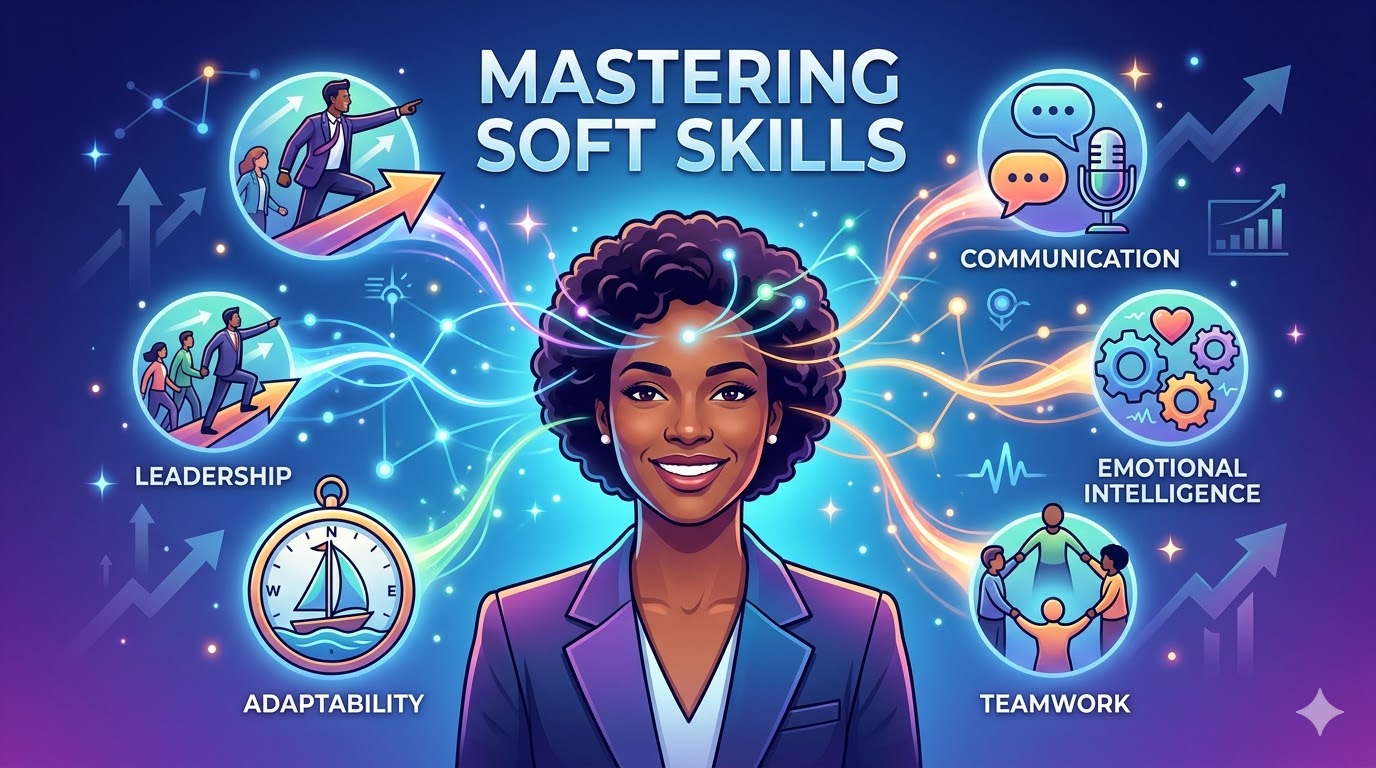
Mastering Soft Skills: The Secret to Long-Term Career Growth
Your technical ability—your hard skills—is what gets your foot in the door. It’s what earns you that initial job or the chance to prove yourself. But as you climb the professional ladder, the script flips. The higher you go, the less important your technical prowess becomes, and the more critical your "soft skills" become.
Soft skills—often dismissed as "people skills"—are non-technical attributes that determine how you interact, solve problems, and manage yourself. These aren't just "nice to have"; they are the secret weapon of enduring professional success and the primary driver of long-term career growth.
The Technical Trap: Why Hard Skills Alone Are Not Enough
In many fields, you can advance in the first few years by just being technically proficient. You're the one who can write the code faster, analyze the data better, or close the most deals. But this creates a ceiling.
You are likely to hit a plateau when you move from being an individual contributor to a leadership role. At that point, the challenge isn’t just doing the work; it's motivating others to do the work well. A lack of soft skills leads to mismanaged teams, communication breakdowns, and burnout—all barriers to further advancement.
To break through this ceiling, you must actively pivot and prioritize the development of your soft skill toolkit.
The Mount Rushmore of Soft Skills for Career Success
Not all soft skills are created equal when it comes to long-term impact. If you want to invest in yourself, focus on mastering these essential competencies:
1. Emotional Intelligence (EI)
Emotional intelligence is the ability to recognize, understand, and manage your own emotions, while also recognizing and influencing the emotions of others. This is the cornerstone of great leadership.
-
Self-Awareness: Understanding how your mood and actions affect your team.
-
Empathy: Genuinely connecting with a colleague who is stressed or overwhelmed.
-
Relationship Management: Navigating difficult conversations and resolving conflicts without damaging trust.
2. High-Impact Communication
This isn't just about public speaking. High-impact communication is the ability to convey complex ideas clearly and persuasively across different mediums and audiences.
-
Active Listening: Understanding the full context of a problem before offering solutions.
-
Clarity and Brevity: The power of being succinct, especially in email and presentations.
-
Public Speaking: Delivering powerful, concise messages that inspire action or alignment.
3. Adaptability and Resilience
The only constant in the modern workplace is change. Adaptability is the capacity to embrace new processes, software, or strategic pivots without losing momentum. Resilience is the ability to bounce back from setbacks.
-
Continuous Learning: A commitment to upskilling as technology evolves.
-
Grit: The persistence needed to navigate complex projects and overcome obstacles.
4. Collaborative Leadership and Delegation
You cannot grow your career alone. Leadership in the modern world is less about commanding and more about fostering a safe and collaborative environment.
-
Empowerment: Giving your team the trust and tools they need to succeed independently.
-
Conflict Resolution: Moving beyond avoidance and tackling team tensions constructively.
How to Actively Master Soft Skills
Soft skills are not fixed personality traits. You can develop them, just as you developed your coding or financial modeling skills. It just requires intentional practice and feedback.
-
Seek Honest Feedback: Ask trusted colleagues, mentors, or your manager for feedback on your communication style, emotional reactions, and leadership behaviors.
-
Observe Masters: Identify leaders you respect for their people skills and study how they communicate, handle stress, and run meetings.
-
Invest in Formal Training: Many professional courses, workshops, and coaching programs specialize in emotional intelligence, negotiation, and communication.
-
Practice on the Job: The best place to practice is right where you are. Set small, specific goals, like asking more clarifying questions in meetings or practicing a difficult conversation scenario before you have it.
Conclusion: Future-Proofing Your Career
Technical skills are increasingly vulnerable to automation and AI. But the ability to connect, inspire, and lead other human beings remains uniquely, and indispensably, human. By prioritizing the development of your soft skills, you aren't just improving your current job performance—you are future-proofing your entire career and unlocking the door to the highest levels of long-term professional growth.