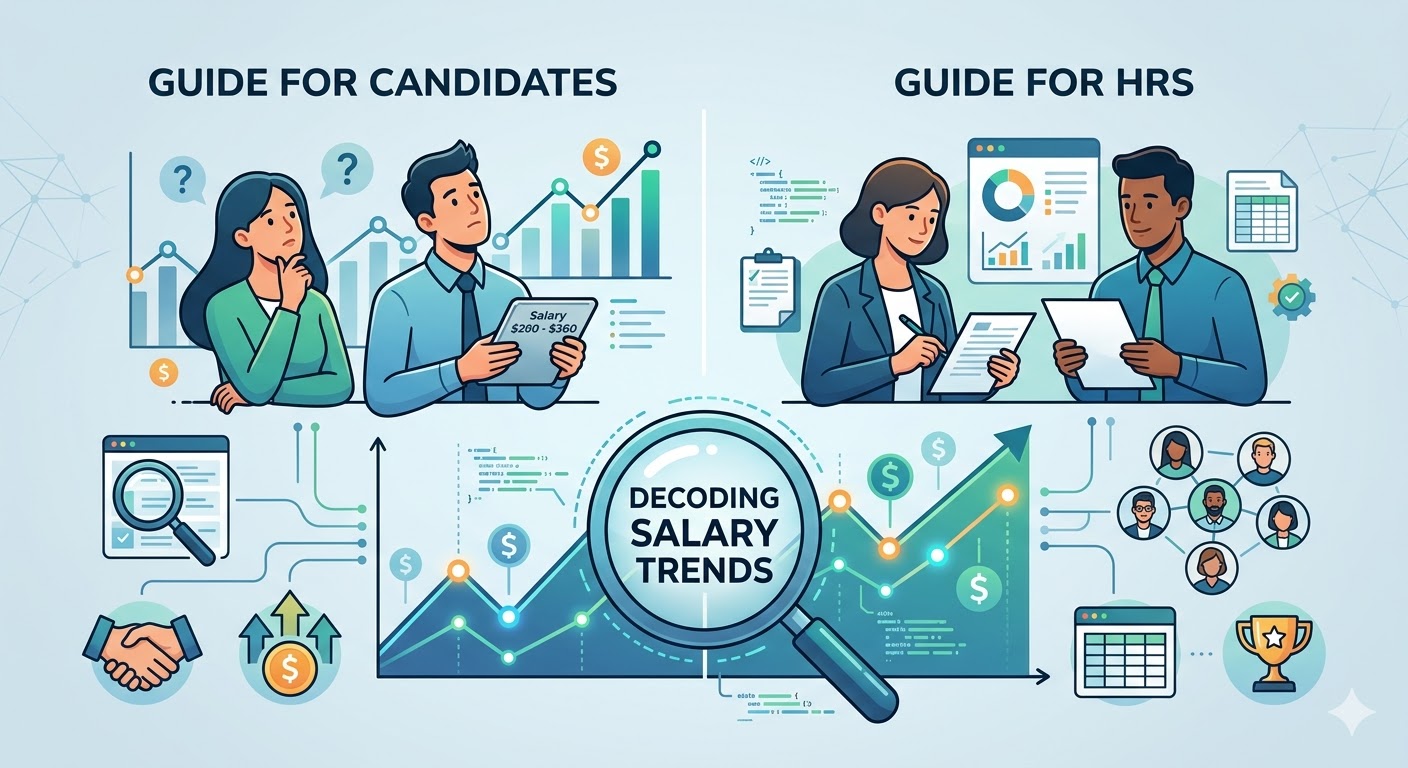
Decoding Salary Trends: A Guide for Candidates & HRs
Salary. It’s the elephant in the room for every job interview, annual review, and talent strategy session. But determining "market rate" isn't as simple as checking a single online survey. Real compensation is a complex equation driven by a shifting landscape of factors.
To navigate this landscape, both candidates and HR professionals need to move beyond simple assumptions and learn how to decode modern salary trends. This isn't just about finding an average; it's about understanding the why behind the numbers and using that data to achieve your goals.
For Candidates: Negotiation is Power, Knowledge is the Tool
As a job seeker, entering a salary negotiation with only "what you want" is a weak position. You need to anchor your requests in objective market data.
1. The Death of the Nationwide Average
A general "average salary" for a job title across the entire country is almost meaningless. The $70k average for a software engineer in Omaha means nothing to someone applying in San Francisco or New York City.
Actionable Insight: Use tools that adjust salary data by geographic cost of living and specific metropolitan areas. Understand how geography impacts purchasing power, not just the raw salary number.
2. Industry, Experience, and Skill Overlaps
Your title is only one factor. A 'Project Manager' in construction commands a different salary than one in software development. Experience (entry, mid, senior) also makes a major difference, but don’t forget specific skills. Proficiency in an in-demand technology, a specialized certification, or a niche skill can command a significant premium.
Actionable Insight: Research job descriptions with your exact skillset. If your specific tech stack pays more than the general role average, document it.
3. Mastering Real-Time Data and Dynamic Markets
Annual salary guides are outdated the moment they are published. The job market moves fast. A skills shortage this quarter could drive up salaries by 15% next quarter.
Actionable Insight: Supplement older guides with real-time data sources like Glassdoor, Levels.fyi (great for tech), or even recently posted job openings that list salary bands. Multiple data points create a much stronger argument.
For HR Professionals: Build competitive compensation, Not Just ‘Averages’
For HR, understanding salary trends is about being proactive, not reactive. You cannot wait for candidates to start rejecting offers before you realize your salary bands are outdated.
1. Embrace Data, Not Anecdotes
"We heard this other company is paying $10k more" is not a strategy. You need a data-driven approach to stay competitive while maintaining internal equity.
Actionable Insight: Invest in reputable market intelligence tools. Use internal data from recent hires, exit interviews, and candidate feedback to validate your bands. The goal is a compensation strategy anchored in defendable data, not guesswork.
2. Contextualize Every Role: Location, Skills, and Impact
Like candidates, you must move beyond the title. Are you hiring a generalist or a specialist? If you have a remote team, do your salaries account for the employee’s local market or the company’s headquarters market?
Actionable Insight: Create clear salary structures with wide bands that can accommodate differences in experience and specialized skills. Explicitly define your remote compensation policy to manage expectations.
3. The Power of Internal Equity and Growth
A salary trend can tell you what the next hire costs, but it must be balanced against what you are paying your current team. Neglecting internal equity to land a new hire will only create turnover later.
Actionable Insight: Use external market data to inform your internal salary review process. Ensure that as market rates rise, you are making market-based adjustments for your current top performers to maintain engagement.
Conclusion: Transparency Drives the Market
Whether you are seeking your worth or building a team of experts, decoding salary trends requires a commitment to data and transparent communication. When both parties can access and understand objective compensation drivers, negotiations become fair, offers become competitive, and trust is built from day one. In today’s talent-driven economy, understanding salary is an essential strategic skill, no matter which side of the table you sit on.